Short answers · 04 of 5
How Low Should a Viking Simmer Flame Go?
Low enough to hold the pan you actually cook in. Viking built Vari-Simmer as a variable band of settings rather than a single one, because the size of the pan and the amount of food in it change how much flame a gentle simmer needs. Viking Repair Service Denver, (720) 704-2791.
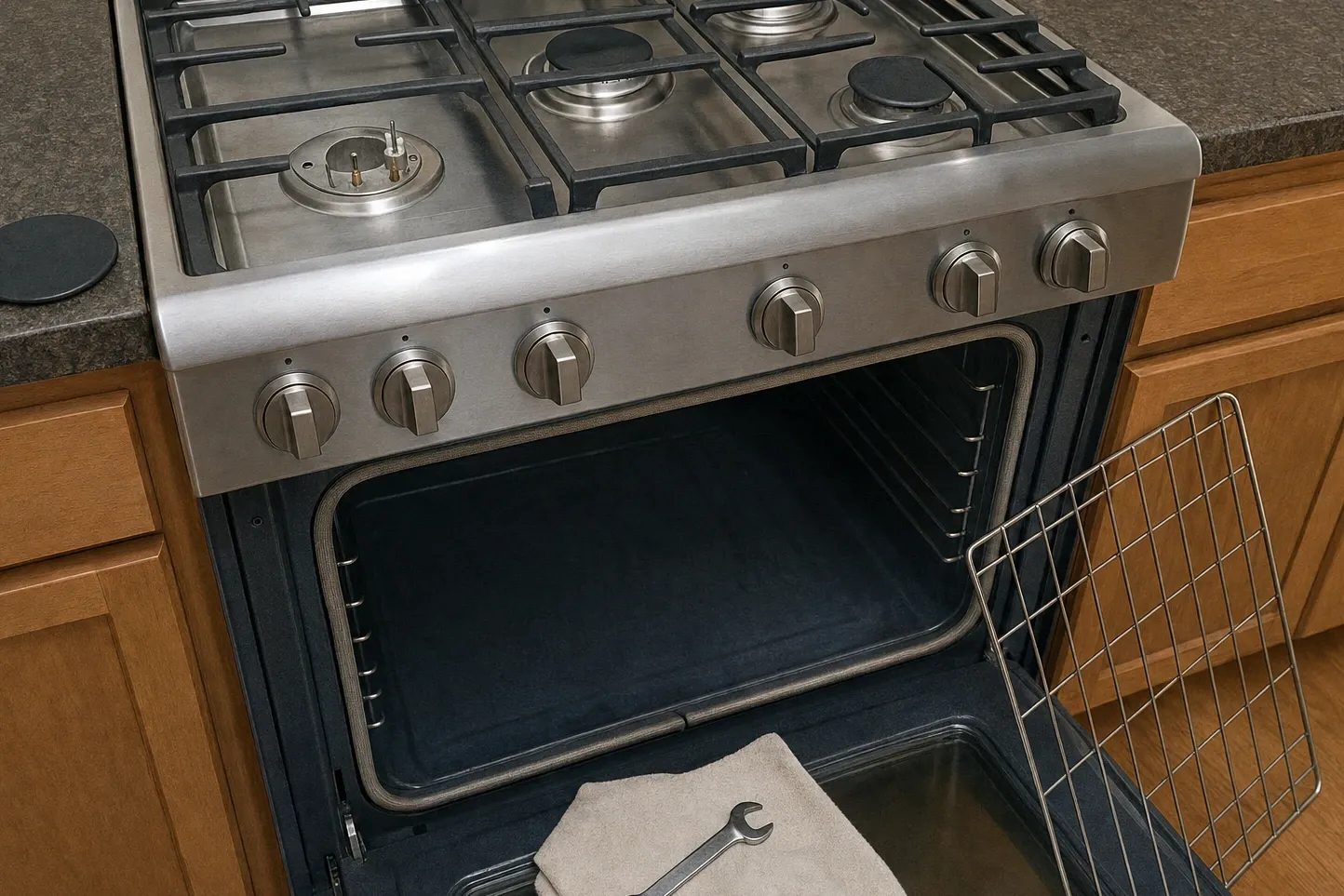
In this frame: slide-in gas range, one burner cap lifted off.
How we check it
What a simmer that drops out is telling us
Start by counting. One burner failing low while the others hold puts the question at that burner: a cap sitting proud, a head a notch out of its locating tabs, or ports partly closed by something that boiled over and baked on. Every burner failing low together asks something else, and it is the same short list that sits behind a tall orange flame — ports crowded shut, shutters out of adjustment, or a gas the range was never configured for. Those are the causes Viking names, and they are the ones we work through in that order.
Then the kitchen. A simmer flame is small on purpose and has very little holding it to the ports. Air moving across the cooktop will lift one off with nothing at all wrong at the range, which is why the hood and the windows get asked about first.
How we test it
With your pan, not ours. A wide thin pan sheds heat quickly and asks the flame for more; a small heavy one asks for almost nothing, and one low setting can be right for the first and useless for the second. So the pan that fails goes back on the burner it fails on, filled the way you would fill it, and stays there long enough for the flame to settle or quit.
Caps and heads come off cold. Ports are cleared with a straight pin, never opened out, and everything goes back level with the arrow on the head pointing to the rear of the range.
What you can look at yourself
- Use the pan that fails rather than a test pan. A wide thin one and a small heavy one ask completely different things of the same low setting.
- Lift the cap while the range is cold and look into the ring of ports. Anything baked into them makes the flame patchy first and unreliable at the bottom of the dial later.
- Watch for moving air. A downdraft running beside the burner, a hood wound up, or a sash open across the room will take a genuine simmer out on its own.
Clifford Nakamura
- Certified
- EPA 608 certified
- Bench
- Service technician — controls and intermittent faults
- Trade
- 22 years in the trade