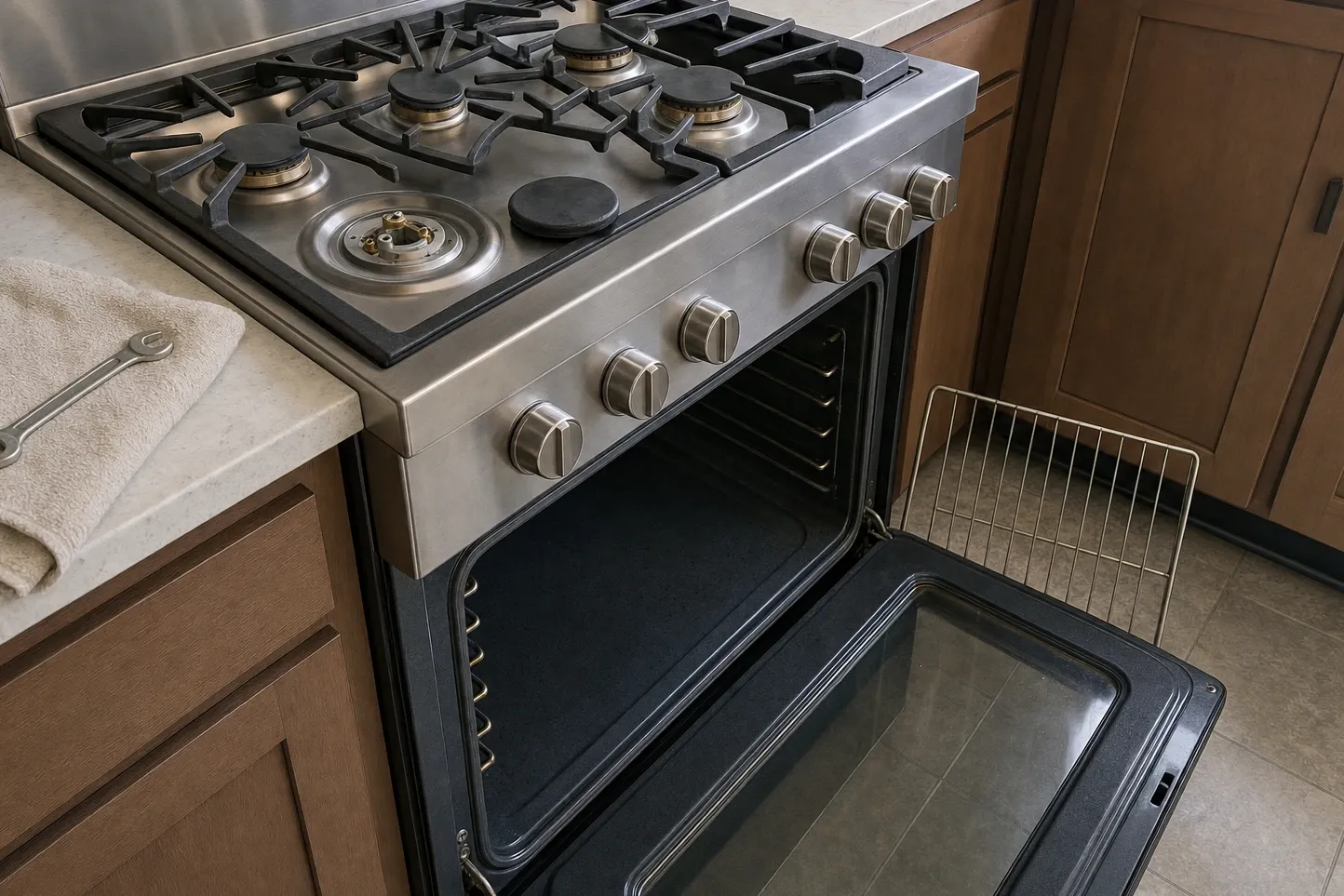
- 1 burner base, stripped
- 2 burner cap, lifted off
- 3 burner grate in place
- 4 open oven cavity
In this frame: front burner stripped to its base, dark cabinetry.
Clifford Nakamura
- Certified
- EPA 608 certified
- Bench
- Service technician — controls and intermittent faults
- Trade
- 22 years in the trade
Repair or replace · 03 of 6
Corroded Burner Heads and Caps on a Rangetop
Pitted caps, a ragged flame, and what has to be renewed.
A sealed Viking burner is four pieces stacked one on another — grate, cap, head, base — and the igniter stands alongside them. Corrosion works on the two in the middle, and it works on them from the top down, because that is where everything that boils over lands.
What is actually corroding
Not the range. A pot that runs over drops sugar, salt and starch onto a cap that is still hot, it bakes on there, and it stays until somebody lifts the cap and takes it off. Viking is blunt about the routine: caps come off and get cleaned after a spill-over, and keeping them clean is what keeps ignition proper and the flame even. The guide also rules out the two shortcuts everybody reaches for. A dishwasher and a self-clean cycle will both rust these pieces, and neither is worth the time it saves.
The cap will usually come back
A cap pulls straight up off the head. Warm soapy water and a soft cloth handle most of it, and a non-abrasive cleaner with a soft brush or pad handles what has cooked on. Dried properly, a cap carrying nothing worse than discolouration goes straight back on and does its job. What it has to do is sit level when it lands. A cap rocking on its seat throws the flame pattern out on that burner alone, which is how a cleaning problem gets mistaken for a gas problem.
When the head is finished
Ports decide it. A blocked port is opened with a straight pin — never widened, never reshaped, and never with a toothpick, which breaks off inside and makes things worse. That works while there is still metal around the hole. Where corrosion has eaten the port edges away, the hole is no longer the size or shape it left the factory as, the flame at that point stands wrong however clean it is, and a pin has nothing left to clear. That head is renewed. The base under it is wiped down with hot soapy water and nothing else: no steel wool, no scouring powder, no metal blade scraping at the aluminium.
Putting it back so it stays right
Two tabs underneath the head locate it against the outer edge of the base, and they must not end up lined up with the igniter. The cap has to finish level, and the arrow on the burner points towards the back of the range. Get that wrong and the burner will light, badly, and the next person to look at it will blame a part that was never at fault.
When to do the whole rangetop
If one cap is pitted and the others are chalky, do the lot while the rangetop is open. The labour is already spent, these are among the least costly parts on the machine, and matching burners across the top is the only way to know that a wrong flame later means something new rather than something old you decided to live with.
Before you decide anything
- Lift the caps off cold and run a finger over the seating face. A grey chalky bloom wipes away. Pitting you can feel the edge of does not.
- Clean a cap after the spill-over rather than at the weekend. Sugar and starch left to bake solid is where most of this starts.
- Keep caps and heads out of the dishwasher and out of a self-clean cycle. Viking warns against both routes, and rusting is the reason it gives.
- Look at whether one burner is like this or all of them. One is a part to change. The whole rangetop is a cleaning habit to change as well.
Pitting gets worse quietly and takes the flame down with it. Ring Viking Repair Service Denver on (720) 704-2791 and you will be told which pieces will clean up and which are spent before anything is ordered.